


Developing and manufacturing medical devices according to ISO 13485
Today the health and lifestyle market is huge. Not only the classic industrialised nations of the Western world but also the emerging markets in Asia – and increasingly in the Arab world and Africa – are developing a growing demand for scientific and technical innovations that promise better health and a longer life. Better living conditions, secure jobs and rising prosperity worldwide mean that health is becoming ever more important to people.
Like the pharmaceutical market, the lucrative medical device sector is subject to strict legal control. Medical device manufacturers who do not observe the legal requirements precisely and do not work carefully in quality management have little chance in this market. Not only are the legal requirements high, but above all the quality expectations of customers. For medical devices this means not only that they actually fulfil their intended purpose in practice, but also that their use is safe for patients and users and that any residual risks are acceptable compared with the expected benefit.
Types of medical devices
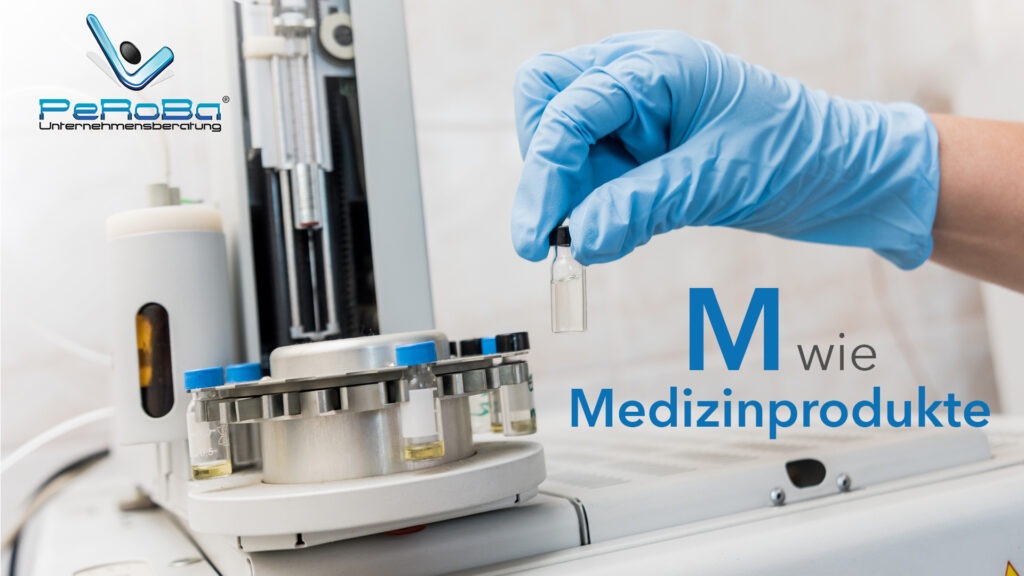
The term medical device covers above all products that have a “physical” effect on the body – in contrast to the pharmacological effect of medicinal products. Medical instruments, laboratory equipment and surgical items such as catheters, infusion sets and dressings are classic examples. Dental products, implants and aids such as hearing aids and contact lenses are becoming increasingly important. In the care sector, walking aids, wheelchairs or compression stockings can also be classified as medical devices.
With the progressive digitalisation of medical technology, software development has become one of the most important areas of medical devices – regardless of whether the software is part of a device or works on its own.
For medical devices to be placed on the market and put into service in the EU, CE marking with a corresponding declaration of conformity is required. Quality management for medical devices therefore not only makes economic sense, but is often actually required.
What is ISO 13485? – Definition
ISO 13485 is an internationally recognised standard for quality management systems in medical technology. It sets out the requirements that organisations must meet to produce safe and reliable medical devices. Whether you are a manufacturer, supplier or service provider in medical technology – ISO 13485 ensures that all processes, from development to delivery, meet the highest quality standards.
The standard is particularly important because it helps organisations comply with legal and regulatory requirements. In many countries, a quality management system according to ISO 13485 is a prerequisite for the approval of medical devices. This includes both the documentation of processes and the risk assessment and traceability of products.
Another core element of ISO 13485 is demonstrably maintaining the effectiveness of the QM system. Organisations learn to design their processes efficiently, identify risks early and ensure the quality of their products in the long term. At the same time, the standard makes preparing for audits and certifications easier, as it provides clear guidance on organisation and documentation.
Organisations certified to ISO 13485 enjoy a high level of trust among customers and business partners, as they demonstrably comply with quality standards and supply safe medical devices. The standard is therefore not only a regulatory instrument but also a strategic tool for increasing competitiveness in medical technology.
ISO 9001 and ISO 13485 – quality management for medical devices
ISO 13485 is based on ISO 9001, but does not follow its current structure and sets its own priorities: it still requires a quality manual and more documented procedures, closely links risk management with product safety (ISO 14971), requires the validation of processes and of software used in the QM system, and regulates complaints and reporting to authorities. Instead of continual improvement, the focus is on maintaining effectiveness.
While ISO 9001 was republished in September 2026, ISO 13485:2016 remains unchanged until 2030.
ISO 13485 and the MDR
The EU Medical Device Regulation (MDR, Regulation (EU) 2017/745) requires manufacturers to have a quality management system. The European version EN ISO 13485 is the recognised tool for this; its annexes show which MDR requirements it covers – and which must be met in addition.
ISO 13485 for suppliers and contract manufacturers
Suppliers – for example from metal and plastics processing, electronics or sterilisation – are also increasingly asked by their customers for ISO 13485. If you already work to ISO 9001 or IATF 16949, you have a good basis: many processes can be extended rather than rebuilt.
Medical devices for the US market
Since 2 February 2026, the FDA’s Quality Management System Regulation (QMSR), which incorporates ISO 13485:2016, has applied in the USA. A QM system according to ISO 13485 is therefore the common basis for the US market as well.
ISO 13485 checklist – step by step
| Consulting phase | Checkpoints | Status |
|---|---|---|
| 1. Initial analysis | Record the current state of the QM system | ⬜ |
| Define the scope of ISO 13485 | ⬜ | |
| Review processes and documents | ⬜ | |
| Check regulatory requirements (e.g. MDR) | ⬜ | |
| Identify gaps against the standard | ⬜ | |
| Prepare an action plan | ⬜ | |
| 2. Implementation & system set-up | Structure the quality manual according to ISO 13485 | ⬜ |
| Prepare procedures and SOPs | ⬜ | |
| Define roles and responsibilities | ⬜ | |
| Introduce document control | ⬜ | |
| Link risk management according to ISO 14971 | ⬜ | |
| 3. Training & implementation | Train employees on the QM system | ⬜ |
| Support implementation of processes in day-to-day business | ⬜ | |
| Ensure documentation requirements are met | ⬜ | |
| Promote internal communication and quality awareness | ⬜ | |
| 4. Internal audit & certification | Conduct an internal audit according to ISO 13485 | ⬜ |
| Initiate corrective actions for nonconformities | ⬜ | |
| Select a certification body & plan the audit | ⬜ | |
| Support during the certification audit | ⬜ | |
| 5. Follow-up | Prepare the management review | ⬜ |
| Identify improvement potential | ⬜ | |
| Regular monitoring and maintenance of the QM system | ⬜ |
ISO 13485 with PeRoBa® Unternehmensberatung GmbH
With many years of experience in quality management, PeRoBa® Unternehmensberatung GmbH (Baldham, with an office in Munich) is your expert partner for all questions about ISO 13485 – quality management for medical devices. Our holistic approach and our specialisation in quality management for mechanical engineering and software development enable us to develop successful, sustainable QM concepts in this field as well. We support you on your way to successful ISO 13485 certification – following the principle of help for self-help.
Book a free, no-obligation initial consultation or call us: +49 8106 / 2308992.
Frequently asked questions about ISO 13485
Is ISO 13485 mandatory?
What is legally required is a quality management system – for example under the MDR in the EU or the QMSR in the USA. ISO 13485 is the internationally recognised way to meet this requirement; many customers and authorities expect certification.
What is the difference between ISO 13485 and ISO 9001?
ISO 13485 focuses on regulatory requirements and product safety: more documented procedures, close risk management according to ISO 14971, validation of processes and software, reporting obligations. Instead of continual improvement, it requires the effectiveness of the system to be maintained.
Will ISO 13485 be revised soon?
No. ISO 13485:2016 has been confirmed and remains unchanged until 2030. In Germany, DIN EN ISO 13485:2021-12 applies.
Do suppliers also need ISO 13485 certification?
Not necessarily, but increasingly often: manufacturers prefer suppliers with a QM system according to ISO 13485 because they have to integrate their services into their own system.

About PeRoBa®:
PeRoBa® Unternehmensberatung GmbH has specialised in management systems since 1991. The company has been headquartered in Baldham since 2011 and also maintains an office on Prinzregentenstraße in Munich. PeRoBa® advises, audits and assesses to support clients in introducing and implementing their management systems, and also offers audits, QM training, seminars and workshops. Since January 2016, the in-house, patented software iVision® – Smart Remote Audit Solution has been on the market.
Dr. Roland Scherb is the founder and Managing Director of PeRoBa® Unternehmensberatung GmbH, certified to DIN EN ISO 9001, ISO 14001 and ISO 27001 and based in Baldham. He is President of the Bundesverband der Auditoren e. V. (German Federal Association of Auditors), head of the ISO Certification Competence Forum at BVMW e. V. (German Association for Small and Medium-sized Businesses) and a member of the DIN working committee NQSZ NA 147-00-07 GA on the revision of DIN EN ISO 19011. He is also a book author as well as a trainer and lecturer at renowned educational institutions on management systems and the associated core methods.

How may we help you?
Arrange a free, no-obligation initial consultation via online appointment, or send us a message using our contact form. You are also welcome to call us.
In the free initial consultation, we first clarify your needs.