



What the quality pioneers left behind in ISO 9001:2026
The new ISO 9001:2026 is not a form to fill in. It is a hundred years of quality experience in condensed form. Those who know where its requirements come from understand what they are for and implement them more effectively. An overview of nine pioneers, their documented contributions and the places where their ideas live on in the standard.

Prologue: Hammurabi and the responsibility of the maker
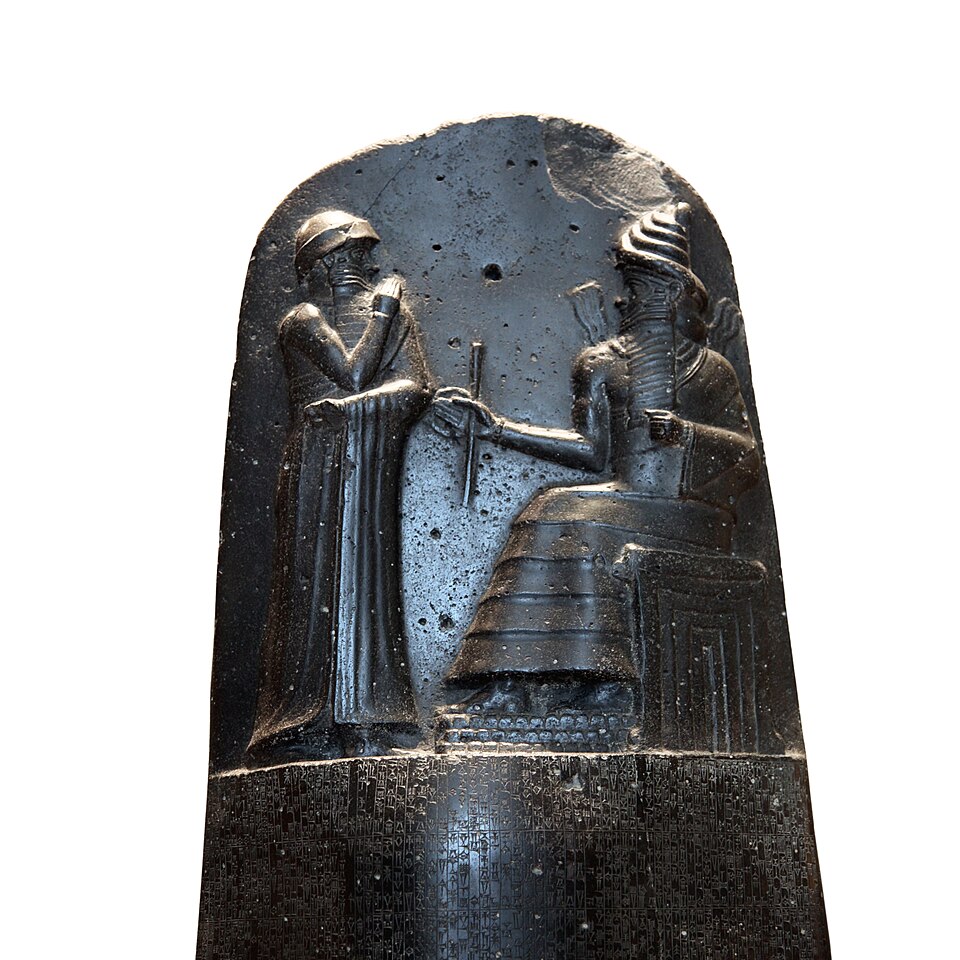
The Code of Hammurabi (Babylon, around 1780 BC) governs the liability of builders in laws 229 to 233. If a house that was not built properly collapsed, the builder was held personally liable. If the walls showed defects before completion, he had to make them sound at his own expense. This is not quality management in today’s sense. The basic idea still holds: whoever delivers is responsible for the quality of the product.
1. Walter A. Shewhart: understanding variation
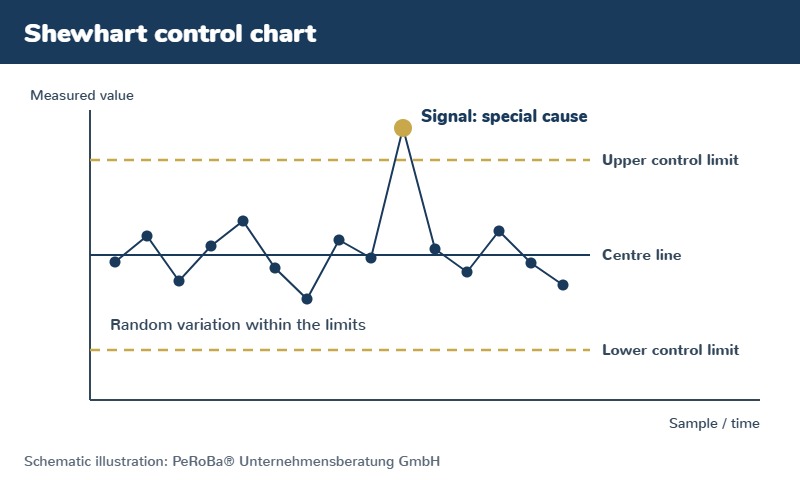
Contribution: On May 16, 1924, Shewhart sketched the first control chart at Western Electric. His distinction between random and assignable causes of variation founded statistical process control. The cycle that later became PDSA and PDCA also goes back to him.
In ISO 9001:2026: Monitoring, measurement, analysis and evaluation (9.1). The standard explicitly mentions statistical techniques as a possible method of data analysis (9.1.3, note).
Question for your system: Do we react to every deviation, or do we distinguish noise from real signals?
2. W. Edwards Deming: systems thinking instead of final inspection
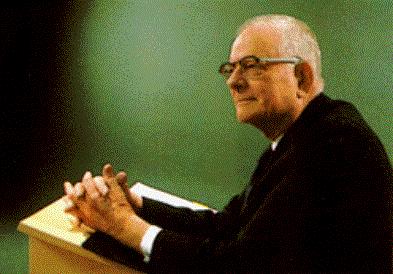
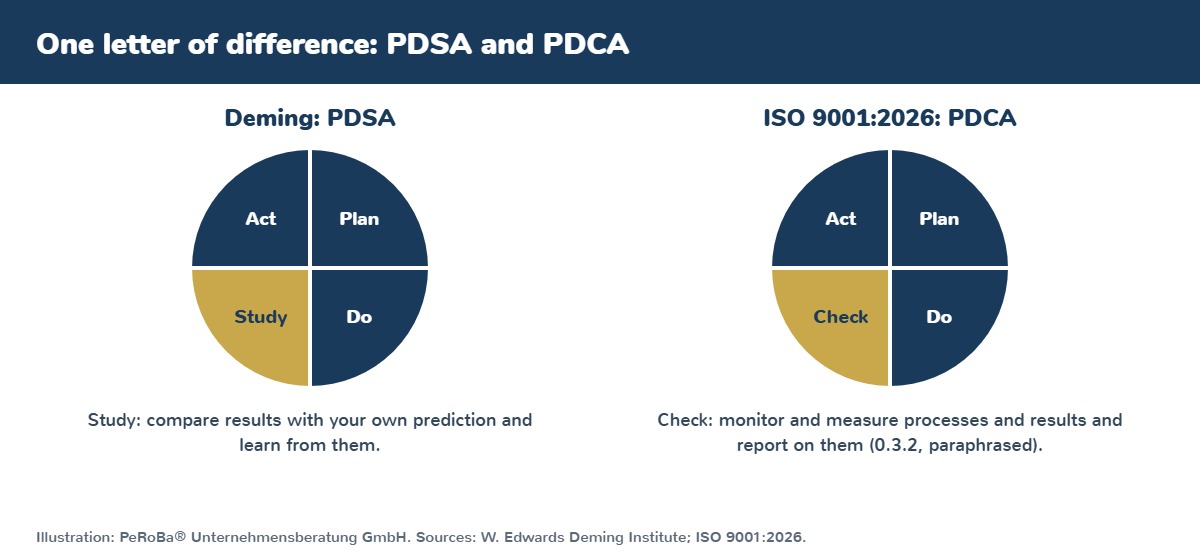
Contribution: Deming built on Shewhart’s work and made statistical thinking widely known after 1950, above all in Japan. His 14 points include the demand to cease dependence on inspection. His mature management model is the System of Profound Knowledge: appreciation for a system, knowledge about variation, theory of knowledge and psychology. Deming himself spoke of the PDSA cycle (Plan, Do, Study, Act). Study means comparing results with your own prediction and learning from them.
In ISO 9001:2026: The process approach (0.3) and the PDCA cycle (0.3.2). The standard therefore continues to use Check, the form from which Deming distanced himself.
Question for your system: Do we only check whether a plan was fulfilled, or do we learn from the result?
3. Joseph M. Juran: managing quality like finance
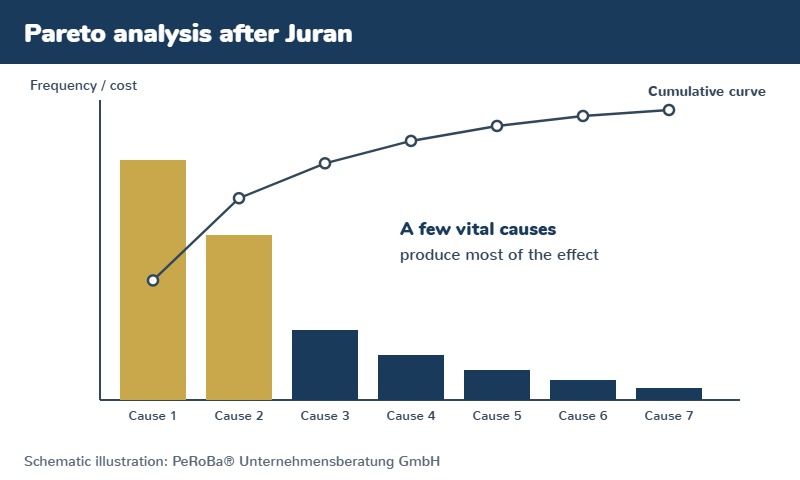
Contribution: Juran developed the Juran Trilogy (1986): quality planning, quality control and quality improvement. He transferred Pareto analysis to quality management. The 80/20 rule is a rule of thumb, not a law of nature.
In ISO 9001:2026: Planning (clause 6), operational planning and control (clause 8) and improvement (clause 10).
Question for your system: Do we know the few causes that generate most of our failure costs?
4. Armand V. Feigenbaum: quality concerns the whole organization
Contribution: With Total Quality Control (1951), Feigenbaum described quality as a task for all functions. His book was the first to classify quality costs into prevention, appraisal, and internal and external failure. TQC is an important forerunner of today’s TQM approaches, but it is not the same thing.
In ISO 9001:2026: Leadership and commitment (5.1), including top management’s accountability for the effectiveness of the system.
Question for your system: Is quality a topic for top management in our company, or the job of one department?
5. Philip B. Crosby: prevention instead of inspection
Contribution: Crosby formulated four absolutes: Quality means conformance to requirements. The system is prevention. The performance standard is zero defects. The measurement is the price of nonconformance. Zero defects is therefore a performance standard within the concept, not the concept itself.
In ISO 9001:2026: Risk-based thinking. New in the 2026 edition: risks and opportunities are addressed separately (6.1.2 and 6.1.3).
Question for your system: What does nonconformance really cost us, and who knows this figure?
6. Kaoru Ishikawa: involving everyone
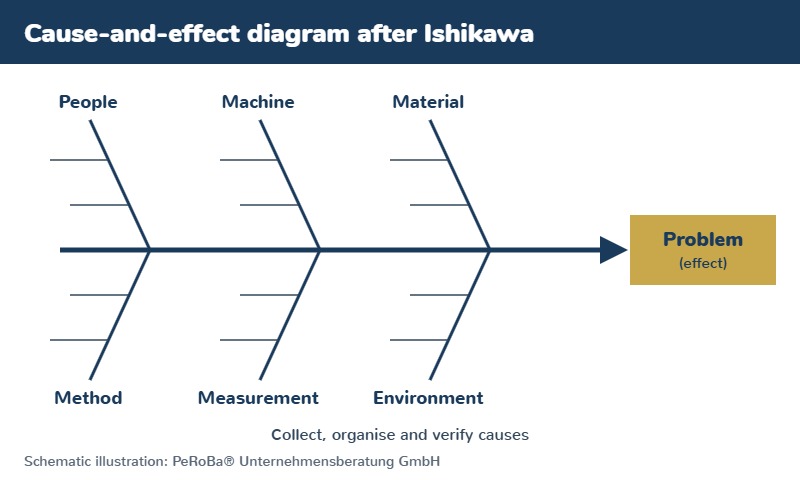
Contribution: Ishikawa systematized and spread the cause-and-effect diagram. Equally influential were quality circles and Company-Wide Quality Control: quality as a task for all employees.
In ISO 9001:2026: The principle of engagement of people (0.2), competence and awareness (7.2, 7.3) and determining the causes of nonconformities (10.2).
Question for your system: Are we looking for causes or for someone to blame?
7. Genichi Taguchi: robust design
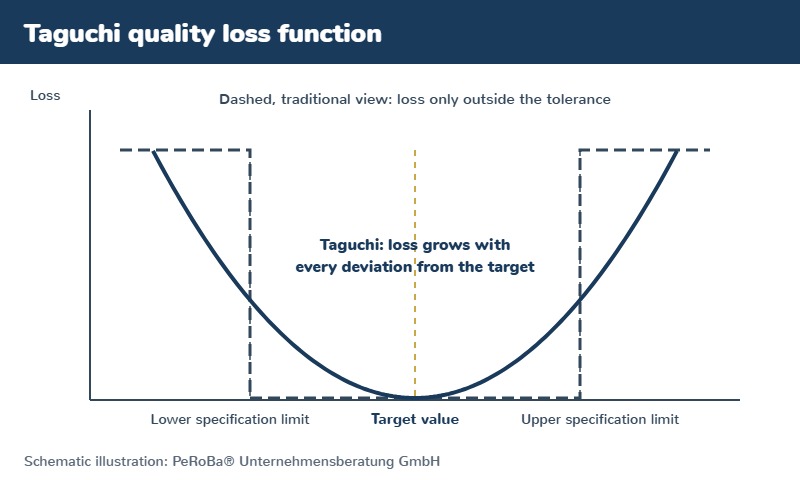
Contribution: Taguchi developed robust parameter design and the quality loss function. Every deviation from the target value causes a loss, not only a value outside the tolerance. He did not invent design of experiments; he used special experimental designs for it.
In ISO 9001:2026: Design and development of products and services (8.3).
Question for your system: Do we design for the target value or merely within tolerance?
8. Taiichi Ohno: flow instead of waste
Contribution: Ohno is regarded as the father of the Toyota Production System. He described the seven types of waste and made flow and pull the guiding principle.
In ISO 9001:2026: The trace is indirect. The standard does not require lean methods. It does require effective processes and continual improvement (10.1).
Question for your system: Which of our activities would the customer pay for if they could see them?
9. Shigeo Shingo: making errors impossible
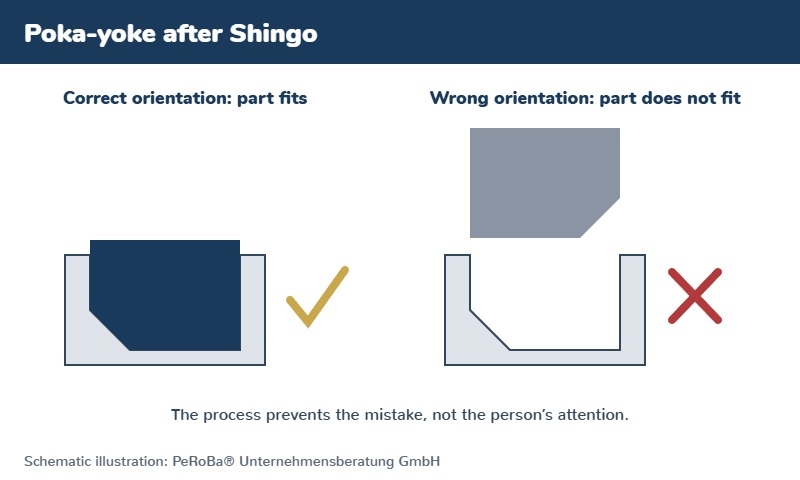
Contribution: Shingo advised Toyota from 1955, developed SMED to shorten changeover times and the poka-yoke principle: the process is designed so that mistakes cannot happen in the first place. He did not invent the Toyota Production System, but he documented it and helped shape it.
In ISO 9001:2026: Actions to prevent human error (8.5.1 g).
Question for your system: Do we rely on attention, or does the process make the error impossible?
What is new in 2026 and whose line it follows
The 2026 edition brings quality culture and ethical behaviour into the requirements: in leadership (5.1.1), awareness (7.3) and the environment for the operation of processes (7.1.4). This is the line of Deming, Feigenbaum and Ishikawa: quality comes from leadership and attitude, not from control alone.
At a glance
| Pioneer | Key contribution | ISO 9001:2026 |
|---|---|---|
| Shewhart | Control chart, variation | 9.1 |
| Deming | PDSA, systems thinking | 0.3, 0.3.2 |
| Juran | Trilogy, Pareto analysis | 6, 8, 10 |
| Feigenbaum | Total Quality Control | 5.1 |
| Crosby | Prevention, four absolutes | 6.1 |
| Ishikawa | Root cause analysis, quality circles | 0.2, 7.2, 7.3, 10.2 |
| Taguchi | Robust design, loss function | 8.3 |
| Ohno | Flow, waste | 10.1 (indirect) |
| Shingo | Poka-yoke, SMED | 8.5.1 g |
Conclusion
None of these pioneers invented quality single-handedly. Their ideas influenced each other and were condensed into requirements over decades. Those who know the origins use ISO 9001 as a tool instead of just working through it.
We support you in setting up and transitioning your quality management system, conduct internal audits and train your employees. We follow our principle of helping you help yourself. Quality is a philosophy and our passion.
Book your free initial consultation or call us: +49 8106 2308992
Author: Dr. Roland Scherb, Managing Director of PeRoBa® Unternehmensberatung GmbH. Note: The assignment of the pioneers to clauses of the standard is a technical classification by PeRoBa® Unternehmensberatung GmbH and not text of the standard. Basis: DIN EN ISO 9001:2026-11 (ISO 9001:2026).
Sources: Fordham Ancient History Sourcebook (Code of Hammurabi); W. Edwards Deming Institute (PDSA, 14 points; Out of the Crisis, pp. 23 f.); J. M. Juran, The Quality Trilogy, Quality Progress 8/1986; ASQ (Feigenbaum); T. Ohno, Toyota Production System; DIN EN ISO 9001:2026-11. As of November 20, 2026.